Winch and Trailer Gear Maintenance: A Step-by-Step Care Schedule
Truck gear fails on a schedule you set by ignoring it. The good news: the entire maintenance program for winches, straps, jacks, and trailer hardware takes about an hour a season plus a few minutes after muddy trips. This is that program, written as a checklist you can actually follow.
After Every Muddy or Sandy Trip
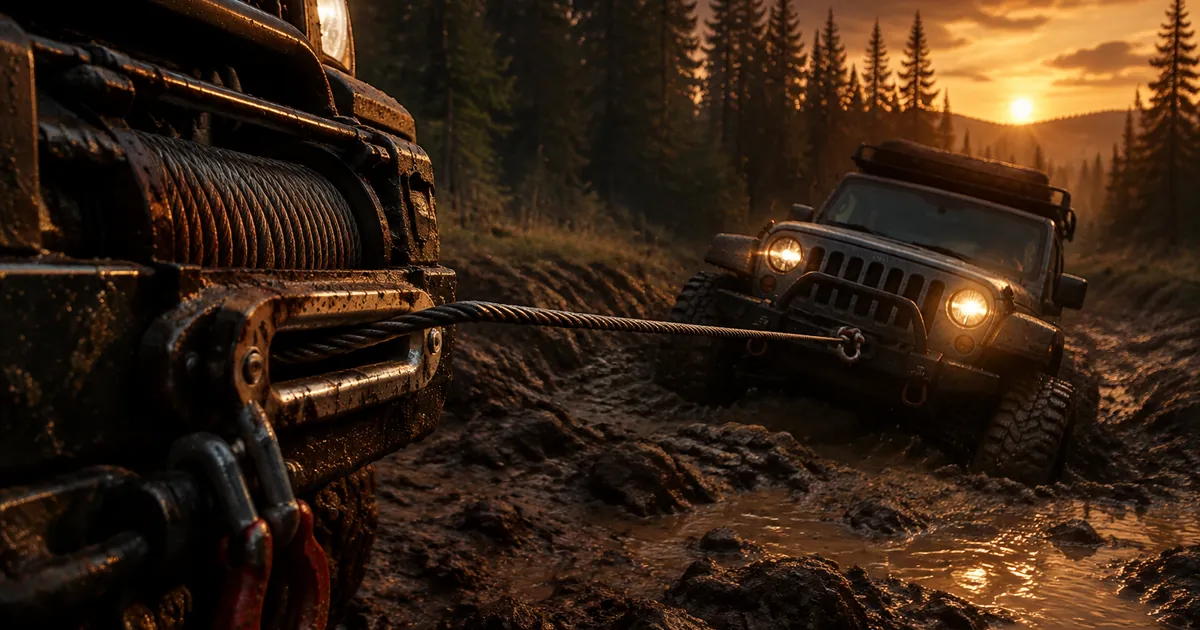
Mud and sand are abrasive and they hold moisture against metal — the combination is what actually destroys gear, not the trail itself.
- Winch line: spool out fully, rinse the drum and line with a garden hose, let dry in the sun, rewind under light tension. Never rewind wet line onto a drum — trapped moisture rusts steel cable from the inside and rots synthetic line sheaths.
- Ratchet straps: unroll, rinse if muddy, air dry. Retract only when fully dry. Mud ground into a ratchet's spring mechanism is the number one strap killer.
- Trailer connector: unplug, shake out grit, let dry, apply dielectric grease before the next connection.
- Jack and shackles: hose off, wipe down, one drop of oil on the hi-lift jack's shear pins and ratchet springs.
Monthly: The 10-Minute Check
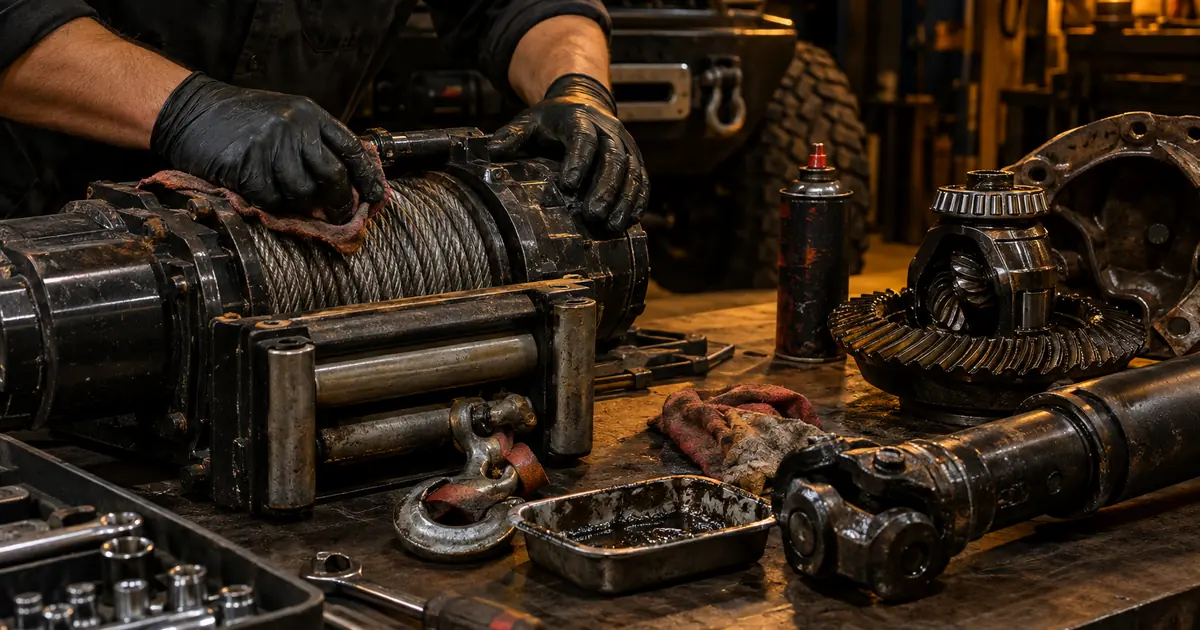
- Winch: exercise the motor for 15 seconds under light load (winch against a tree with the strap). Idle winch motors corrode; monthly exercise keeps the brushes and commutator clean.
- Battery connections: check inverter and winch terminals for corrosion; clean and re-tighten.
- Straps and nets: run your hand along the webbing — feel for cuts, soft spots, or frayed edges that eyes miss. Retire anything questionable; webbing is the cheapest part of the system to replace.
- Trailer lights: full function test with a helper, every connector greased.
Seasonal: The Hour-Long Service
Spring (after salt season)
Road salt is the enemy. Inspect every steel component for coating damage: touch up chips on the trailer jack, coupler, and hitch carrier with cold galvanizing spray. Check safety chains link by link for stretched or cracked welds. Repack or grease the trailer jack's drop-leg tube.
Fall (before winter storage)
Full winch service: run the line out, inspect every foot, clean the drum, and rewind under tension. Torque the winch mounting bolts to spec — they loosen with vibration over a season. Put the 10W solar charger on any vehicle or trailer going into storage; batteries that sit dead all winter are dead for good by spring.
Storage: The Forgotten Half of Maintenance
How gear sits between trips determines how it behaves on them. Straps and nets belong loosely coiled in a dry bin, not compressed under cargo in a wet bed. Winch line stored under tension for months takes a set and pulls unevenly. Steel gear stored on concrete collects moisture against the coating — hang jacks and chains or set them on wood. A $20 stack of rubbermaid bins in the garage does more for gear lifespan than any product you can buy.
Documentation beats memory
Keep a simple gear log — a note on your phone is fine. Date each strap purchase, each winch service, each chain inspection. When something fails early you will see the pattern (a bad batch, a storage problem, an abuse incident), and when you sell the truck, a documented maintenance history is real money at resale time.
What Retires Gear Immediately
- Any strap with cut fibers, chemical staining, or a jammed/bent ratchet.
- A shackle with a bent pin or stretched eyes — forged shackles are cheap; the load they fail under is not.
- Winch line with kinks, flat spots, or a frayed strand count you can count without looking hard.
- A jack with a bent bar, chipped teeth, or a sticky release valve.
Frequently Asked Questions
Can I pressure wash my winch?
Keep the spray off the motor's end seals and the solenoid pack. The drum and line take water fine; the electricals do not.
How long do ratchet straps last?
With rinsing, drying, and garage storage, 3–5 years of regular use. Sun exposure and mud cut that in half. Inspect before every serious load.
What lubricant on a hi-lift jack?
Light machine oil on the pins and a dry graphite spray on the bar — never thick grease, which holds grit against the working surfaces.
Is maintenance different for aluminum gear?
Only in one way: aluminum does not need coating touch-ups, but its fastener threads strip more easily. Check torque on aluminum-mounted hardware by spec, and never over-tighten in the field.
Keep the schedule and your gear outlives the truck. When inspection says replace, the catalog has rated replacements for every item on this list.