How to Choose the Right Truck Gear for Your Off-Road Build
A capable off-road truck is not built in one shopping trip. The builds that hold up season after season are the ones where every piece of gear earned its place — starting with the equipment that gets you unstuck, then the equipment that keeps you moving at night, and only then the equipment that carries your stuff. Buy in that order and you will never waste money on accessories your truck does not need yet.
Start With Recovery: The Gear That Gets You Home
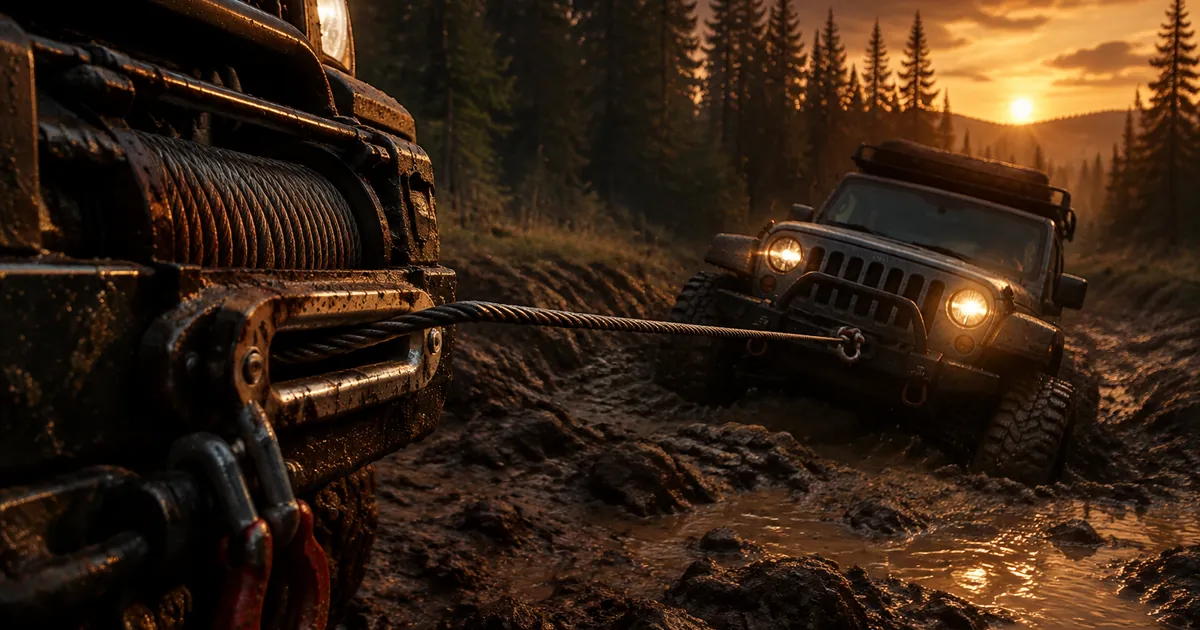
Recovery gear is the foundation of any serious build because off-road driving eventually means getting stuck. The centerpiece is a winch sized to your vehicle's gross weight. A common rule is a winch rated for at least 1.5 times your loaded vehicle weight. For a full-size truck or heavy SUV, that puts you in 12,000 lb electric winch territory; for ATVs and lighter UTVs, a 3,500 lb winch is the workhorse size.
Winch support hardware matters as much as the winch
A winch pulls only as safely as the hardware around it. Add a pair of forged 3/4-inch D-ring shackles for connection points, and a snatch block pulley — doubling your line back through a snatch block doubles your pulling power and lets you redirect a pull around an obstacle. A 48-inch hi-lift jack rounds out the kit for lifting a tire onto a rock stack or straightening a suspension arm on the trail.
Then Lighting: See the Trail, Be Seen
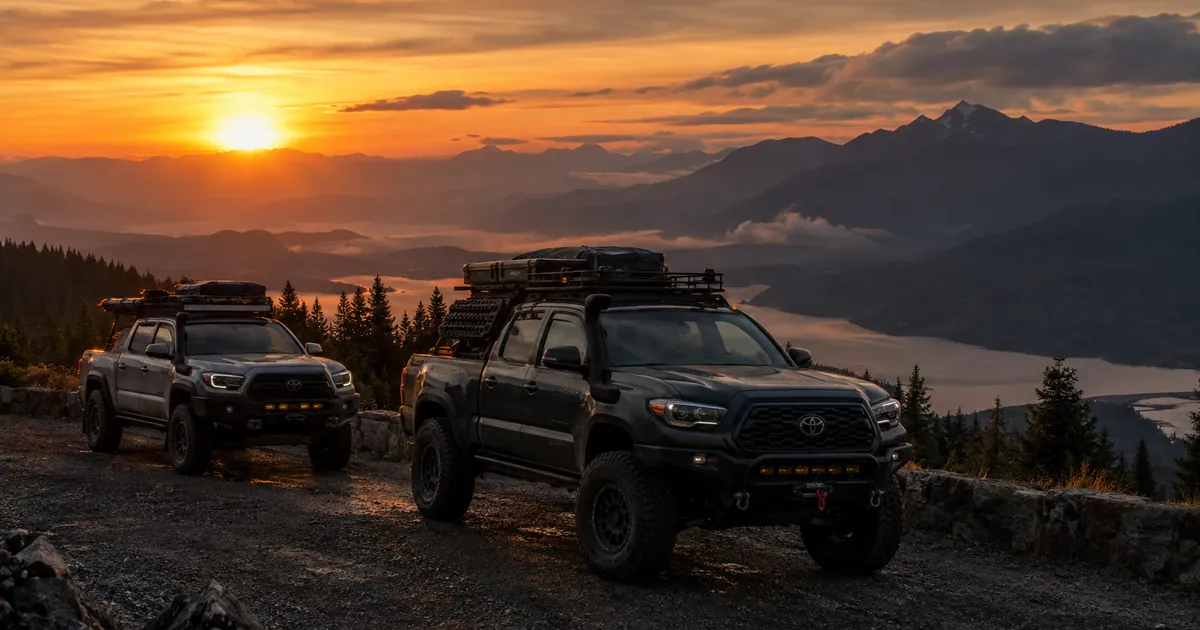
Night driving changes everything. A quality 20-inch LED light bar mounted on the bumper or roof fills the gap between your headlights and the shoulder, and it draws far less power than older halogen setups. Pair it with a dual-lens dash cam with night vision — trail incidents and parking-lot scrapes are exactly what you will want on record.
Then Cargo: Carry the Load Safely
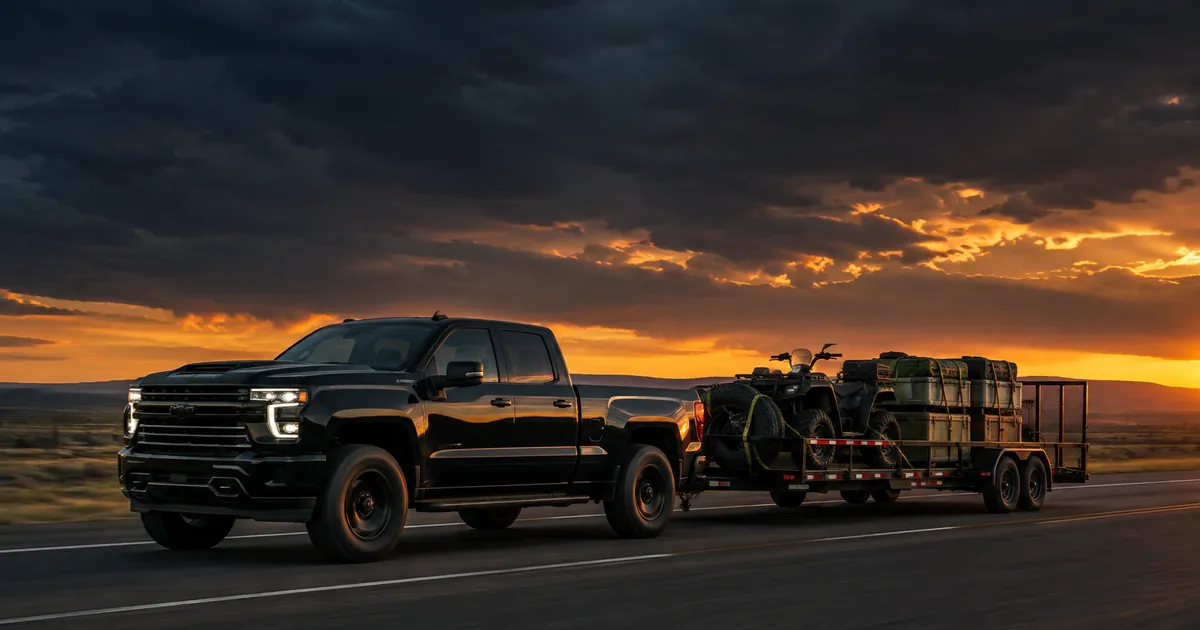
Once the truck can recover and see, equip it to carry. Roof-mounted roof rack crossbars free up bed space, while a 60-inch aluminum bed toolbox keeps straps and tools locked down. For big loads, a folding hitch-mount cargo carrier adds serious capacity without a trailer.
Secure everything twice
Cargo security is a system: a heavy-duty cargo net over the top, 1,500 lb ratchet straps for direct tie-down, and a 3-inch recovery strap in the kit for vehicle-to-vehicle pulls. Check strap condition every trip; UV and abrasion kill webbing quietly.
Power and Air: The Quiet Enablers
Two small items prevent the most common trail frustrations. A lithium jump starter means a dead battery never ends a trip, and a 12V air compressor lets you air down for traction and reinflate for the highway — the single most useful habit in off-road driving.
Build in the Right Order
- Recovery first: winch, shackles, snatch block, jack, recovery strap.
- Visibility second: LED light bar, dash cam, trailer lighting if you tow.
- Cargo third: racks, boxes, nets, straps, carriers.
- Power last but always: jump starter, compressor, inverter, solar charger.
Browse the full gear catalog and build your rig in that order. Your wallet and your recovery times will both thank you.
Fit and Compatibility: Measure Before You Buy
The most common returns in truck gear come from skipped measurements, not bad products. Crossbars need your roof's actual width and factory mounting points; bed toolboxes need the distance between wheel wells; hitch carriers need receiver size and clearance for the tailgate to open. Ten minutes with a tape measure saves a week of return shipping.
Check the load path, not just the rating
Every strap and rack has a working load limit, but your system is only as strong as its weakest anchor point. A 1,500 lb ratchet strap is only worth 1,500 lb if the tie-down points it hooks to are sound. Inspect factory anchor points for rust each season, especially in states that salt roads.
Budget Reality: Where to Spend and Where to Save
Spend on anything that protects life and limb: recovery gear, jacks, and lighting. Save on convenience items that do not take load — organizers, covers, and comfort accessories. A sensible split for a first-year build is roughly 40% recovery, 25% lighting and electrical, 25% cargo management, 10% comfort. You can always add gear; you cannot un-buy a winch that was too small.
Frequently Asked Questions
Do I need all of this for light trail riding?
No. For graded forest roads close to town, a jump starter, air compressor, and basic straps cover most situations. Add a winch when you start driving alone or in remote terrain.
Should gear match my truck brand?
Match the fitment, not the badge. Universal-fit items like universal crossbars or 7-way wiring harnesses list the vehicles they fit — that list matters more than brand matching.
How often should I replace straps?
Inspect before every hard use trip. Cut or frayed fibers, faded webbing, or a jammed ratchet mean replacement — webbing is cheap, a 60 mph cargo release is not.
Ready to build? Start with the recovery category and work down the list.